How Was Enastic Art Made How Was Encaustic Art Made
Waxes suitable for Encaustic Artwork
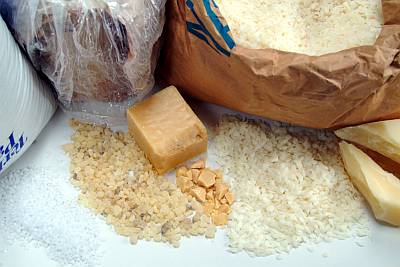
PARAFFIN : DAMAR RESIN : CARNAUBA : BEESWAX : MICRO CRYSTALINE
Some of the main waxes used in basic encaustic formulation.
Encaustic paint needs to contain wax & color.
The quality of these components & the way in which ingredients collaborate defines the final character & behavior of the pigment.
* Since heat is the solvent for encaustic medium no evaporating solvents are needed. However there are enough of formulations to include evaporating solvents, only the resultant wax is and so a dissimilar type of paint. This site does non currently offer any information on solvent inclusive recipes or use.
The simplest encaustic paint could exist a bones mixture of beeswax and an earth paint. However, at that place are many other types of waxes, each with their own unique rut curve and character. In that location are also resins that can be mixed with waxes to alter final working qualities of melting point, flexibility, hardness, adhesion & durability. Pigments (and dyes) offer a multitude of qualities autonomously from the colour they imbue. The particle size can modify the flow character quite dramatically for some application methods. There are many possibilities in formulation.
Notation: All data here is only a starting betoken - the world wide web has loads of in-depth data on waxes, pigments and everything else, and then please inquiry it a bit more to analyze the notes beneath.
Chief WAXES USED IN MOST ENCAUSTIC PAINT MEDIUM FORMULATIONS
Primary waxes frequently used for encaustic medium involve: BEESWAX,
CARNAUBA,
MICRO CRYSTALINE,
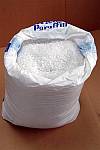
PARAFFIN,
DAMAR RESIN,
Up to Index

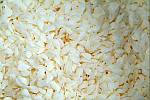
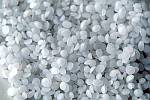
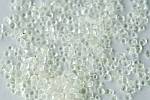
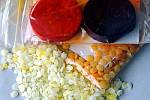
pelleted refined beeswax
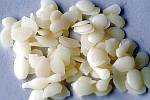
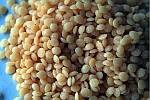
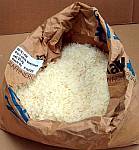
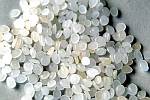
pelleted natural beeswax
Definition of WAX : Any of diverse substances of either mineral origin or plant or animal origin; they are solid at normal temperatures and insoluble in water. OR Whatever of various natural, oily or greasy estrus-sensitive substances, consisting of hydrocarbons or esters of fatty acids that are insoluble in water simply soluble in nonpolar organic solvents.
Beeswax is a natural product produced by young bees in the form of wax scales. Cook signal around 62C. They reckon 8 volumes of love are eaten to each unit of beeswax secreted, and besides estimate that around 150,000 miles of bee flight are required to harvest 1lb of beeswax - precious indeed!
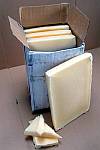
Refined beeswax, that has had all the impurities removed, often comes in pelleted form. It is a bleached cloudy whitish colour, but given sufficient time this will apparently harden and yellow to some caste or other.
In that location are various qualities of natural beeswax Information technology'southward most natural raw land is where it has been separated from the beloved and the main dross. It nonetheless contains some oils and dirt, then can exist blotchy if used for artwork. Electrical heating is used to commercially process beeswax, only solar heating is more gentle. In the latter method the beeswax can exist put through a solar unit many times, each ane helping to refine the wax without exposing information technology to any danger of over-heating. Modern commercial methods are very reliable.
* For encaustic medium refined wax is usually recommended but the natural production will produce a fine medium as well, just understand that it tin tint very pale colours like white quite noticeably.
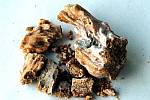
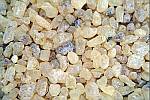
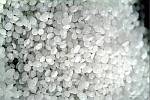
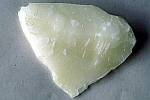
Damar resin comes from a particular tree in Asia. This sample was nerveless in the Malaysian rain wood.
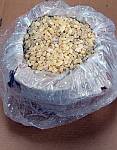
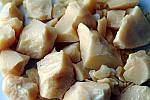
Information technology is refined to produce crystals that have a melting point around 80C. Some damar is whiter and therefore more suited to clarity of color in encaustic mediums. It is preferred over Mastic because it does not have the aforementioned flower issues. (white powdery surface effect- a chip like settled dust.)
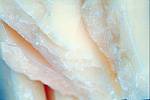
It can incorporate quite a bit of woody dross. In encaustic medium it raises the melt signal, toughens the wax surface, improves both adhesion and flexibility. Information technology can smell quite strong when molten - always ventilate the area.
Up to Alphabetize
More than WAX VARIETIES THAT CAN BE USED IN ENCAUSTIC MIXTURES
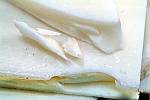
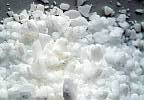
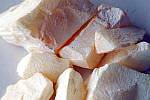
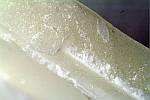
Whilst the in a higher place are the most commonly used waxes in encaustic mediums in that location are others that tin can imbue different qualities. Experimental encaustic work does non ascertain itself by longevity nor gallery praise. It rests on its ain finality, on its own record of a journey through processes & ideas explored. Potential neither recommends nor excludes - it just explores openly.
Up to Index
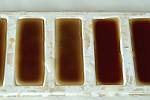
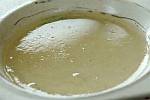
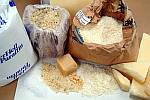
SOME ENCAUSTIC WAXES IN MOLTEN STATE & DURING COOLING




Up to Index
A FEW TERMS THAT Chronicle TO QUALITIES OF WAXES EXPLAINED
Cook Point : The melt indicate of a wax is the temperature that information technology starts to plough from a solid to a liquid, or from a liquid to a solid.
Flash Point : Temperature at which an excessively heated wax begins to vaporize and becomes a volatile gas. The vapors from molten wax are extremely flammable. Individual waxes take a specific wink signal - cheque suppliers for this information. When information technology reaches its flash signal information technology may not fume or chimera, it can but explode, splattering flaming wax in all directions. Don't use open flame burners to rut wax. Utilise controlled devices or ideally the double boiling method to melt your wax. Water boils at 212° F, which is well below the wink bespeak of all waxes we have experienced. As mentioned - bank check for technical information from your manufacturer or sourcing supplier.
Freezing Point : The freezing point is an established point ii to three degrees below the melting bespeak. A solid wax will remain solid, at varying hardness, as long as its temperature remains below the freezing point.
Congealing Bespeak : Temperature at which a wax begins to harden into a solid form. At the congealing indicate, liquid wax volition cease to flow under specific atmospheric condition.
Cloud Point : Temperature at which a wax begins to change color from articulate to opaque. The cloud indicate is an undefined point, from 2 to iii degrees in a higher place the melting bespeak, to x to 50 degrees in a higher place the melting point, depending upon the form of wax and the types of additives in the wax. The deject betoken is the temperature where liquid molten wax is beginning to change structurally and visibly from liquid to solid
Viscosity : Ability of wax to resist flow. The viscosity of wax is represented by a number that defines how a particular wax will menstruum at a certain temperature. The temperature and the viscosity of wax take opposing relationships. The college the temperature, the lower the viscosity, and the lower the temperature, the higher the viscosity. This means that a hot wax has a depression viscosity and will flow improve than a cold wax with a loftier viscosity.
Needle penetration : The hardness of a wax is measured by a standardized process called "needle penetration." It is an indication of how far a needle tin can penetrate the wax at a temperature of 77° F. The college the number, the softer the wax; the lower the number, the harder the wax. The penetration numbers vary from 1 to xiv (difficult waxes), to xv to 25 (soft waxes).
Wax Colour : Color of a wax at a designated temperature. The test is unremarkably done while the wax is in liquid form. The color is determined by comparison the wax colour to a standardized array of gage samples (Saybolt test). The color gage samples range in colour from a low number, (i.eastward. + 2, clear amber while molten, dark amber while solid), to a high number, (i.e. +30, crystal clear while molten, pure white color while solid). Generally speaking, the higher the color number, the lower the impurities in wax . Virtually all food course waxes accept a colour of +25 or greater.
Upwards to Index
Merely Yous As well Demand COLOUR, SO VISIT THE Paint PAGES ...

Up to Alphabetize
PIGMENTS
Visit this department to learn more near pigments.
... AND THERE ARE MANY READY-MADE ENCAUSTIC WAXES AVAILABLE Likewise !
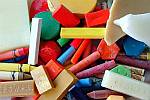
Fix-Fabricated ENCAUSTIC WAX COLOUR PAINTS
Visit this section to see a selection of some of the fix made encaustic wax products "out there". Non all will exist available in your surface area. Some are no longer fifty-fifty fabricated, but it tries to show a range of what is going around.
encaustic.com offers the Encaustic Art range of wax block colours because they are effective and safe in use. They are used worldwide past all ages and abilities without toxic risk. Through instantly achievable techniques the interest and experience of encaustic art continues to spread with excitement and many satisfied users.
These purpose made encaustic fine art wax blocks are made to the highest standards possible and are designed to be safe to utilise by anyone. The pigments are equally low-cal-fast as possible yet nonetheless meet the strict toxic controls demanded and implemented in the Usa. They are labeled with the CL health characterization (caution label) which means that the waxes are condom in content but care needs to be observed when using them with the heated tools, only because these heated implements might inflict lite burns if carelessly handled. The waxes themselves are considered and tested by a professional U.s.a. toxicologist at "Duke" as prophylactic.
However, nosotros are very aware that they do not accommodate all needs nor meet all demands. In respect of that nosotros have used the experience of Michael Bossom to furnish this whole artwork area with some further approaches and materials. Here you can find information to help guide your own exploration in to making, colouring and using encaustic wax medium and encaustic paints successfully.
We promise it is useful for you.
| Arts Encaustic Ltd, Glogue, Pembrokeshire SA36 0ED United kingdom of great britain and northern ireland |
groverablessi1963.blogspot.com
Source: https://www.encaustic.com/techniq/fineart/fineart_waxes/fineart_waxes.html
0 Response to "How Was Enastic Art Made How Was Encaustic Art Made"
Post a Comment